

Google for startups program 2026 is just launched last week Here’s exactly how to position your startup for acceptance, and what you need to prepare.
The Google for Startups programs for 2026 just dropped, and it’s quite unusual this year. New eligibility rules, different application criteria, and a completely revamped selection process, which means if you’re still using old advice, you’re already behind.
Getting into a Google startup program is not just about free cloud credits. It involves mentorship from people who’ve scaled products to millions of users, access to Google’s technical infrastructure, and a network that can land you your next investor meeting or enterprise customer.
But here’s what most founders miss: Google isn’t looking for the best pitch deck. They’re looking for specific signals that your startup can actually execute.
This guide breaks down everything you need to know about Google’s 2026 startup programs. We’ll cover what changed from 2025, who qualifies, what Google actually evaluates in applications, and the mistakes that can get you rejected.
Let us get right into it.
What Is Google for Startups Accelerator Program?
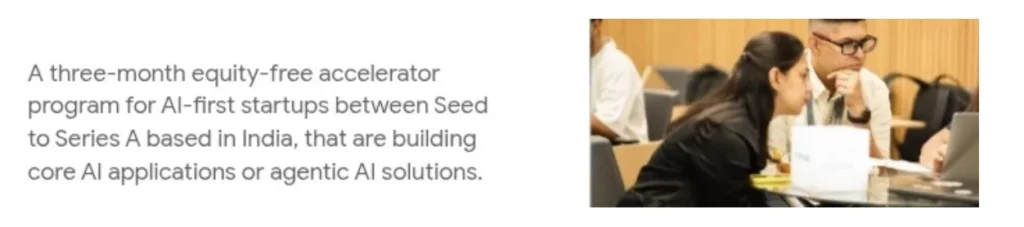
Google for Startups is Google’s global initiative designed to support early-stage companies with the tools, resources, and network they need to scale. It’s not a single program, but rather a collection of different tracks tailored to startups at various stages and in different regions.
The program provides startups with access to Google’s cloud infrastructure, mentorship from Google engineers and product experts, technical training, and connections to Google’s global network of investors, corporate partners, and other founders.
But let’s be clear about what this is and what it is not. Google for Startups is not an incubator where you relocate to Google’s campus for months. It’s not an accelerator that takes equity in your company. And it’s definitely not just a handout of free Google Cloud credits, though that’s part of the package.
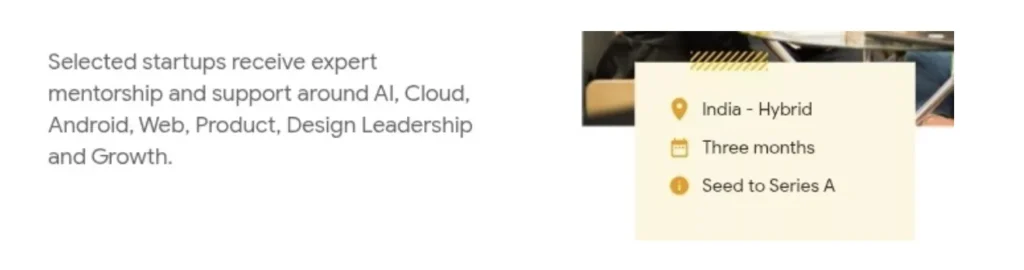
Instead, it’s a structured support system. Startups accepted into the program get tangible resources like cloud credits worth up to $200,000, technical workshops, one-on-one mentorship sessions, and invitations to exclusive founder events.
Google’s goal for the startups program is quite simple: remove technical and network barriers so you can focus on building your product and finding customers.
Google runs several program tracks under the Google for Startups umbrella. Some are regional programs tied to specific Google for Startups campuses in cities like London, Madrid, Tokyo, and São Paulo.
Others are thematic programs focused on specific sectors like AI, Web3, climate tech, or social impact. There’s also the Google for Startups Cloud Program, which is the broadest track and available to eligible startups worldwide.
For 2026, Google has restructured how these programs work. They’ve consolidated some tracks, added new focus areas, and changed the application process to prioritize startups with clear traction and technical sophistication.
If you applied in 2024 or 2025 and got rejected, or if you’re considering applying for the first time, understanding these changes is really important.
What’s New in 2026? Key Changes You Need to Know Before Applying
If you’re familiar with Google for Startups from previous years, don’t assume the 2026 programs work the same way because google made significant changes to how they evaluate, accept, and support startups.
Let us understand what’s different this year.
1. Stricter Eligibility Requirements
In the previous years, pre-product startups with just an idea and a team could get in, but not anymore. For 2026, you need:
- A functional product that users are actually using
- Demonstrated technical capability, either through your product or your founding team’s background
- Clear evidence of problem-solution fit, not just an idea you think is good
Google wants to see that you’ve already built something and that people care about it. If you’re in the phase where you’re still validating the idea, you’re probably too early.
2. Focus on AI and Cloud-Native Startups
Google added dedicated tracks for AI-first startups and cloud-native companies in 2026. If your startup is built on machine learning models, uses LLMs, or is architected for cloud infrastructure from day one, you get prioritized.
This doesn’t mean non-AI startups can’t get in. But if your product has an AI component or relies heavily on cloud infrastructure, make that clear in your application. Google wants to support startups that align with where they see the future going.
Read more: Is Pregrad Placement Real?: Complete Case Study 2026
3. Revamped Mentorship Structure
The mentorship component got an upgrade. Instead of occasional group sessions, 2026 fellows get:
- Assigned mentors based on your specific technical challenges (not random matching)
- Monthly one-on-one sessions for the duration of the program
- Access to Google’s internal technical office hours
- Introductions to relevant Google Cloud specialists
This is a big deal because mentorship is now tailored to what you’re actually building.
Key Highlights of Google for Startups Programs 2026
Before we learn about the eligibility and application strategy, here’s a quick overview of the essential details you need to know about the 2026 programs.
| Program Detail | Information |
| Program Name | Google for Startups Accelerator Program |
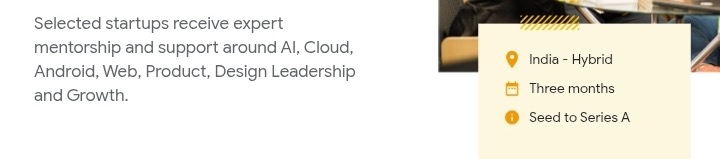
| Program Duration | 3 months |
| Mode of Learning | Hybrid |
| Application Deadline | April 19th, 2026 |
| Program Start Date | June 2026 |
| Equity Required | None (Google takes 0% equity) |
| Geographic Availability | Global |
| Graduation | September 2026 |
| Technical Support | Google Cloud technical office hours, workshops, certifications |
Important Notes for 2026 Applicants
Application Fee: Applying to Google for Startups is completely free. If anyone asks you to pay to apply, it’s a scam.
Multiple Track Options: Beyond the Cloud Program, Google runs specialized tracks for AI startups, climate tech, social impact, and regional campus programs. You can apply to multiple tracks if you qualify.
Read More: UIDAI Internship 2026: Get Assured Pre Placement Offers (PPO) at UIDAI This Year
What Makes Google for Startups 2026 Stand Out?
Plenty of accelerators exist, but most either take equity, offer common support, or disappear after the program ends. Google for Startups does none of that. Here’s what actually sets it apart.
1) It’s Completely Equity-Free
Google for Startups offers equity-free support for the full duration of the program. You get everything Google brings to the table and keep 100% ownership of your company.
2) Dedicated Expert Help
Founders outline the top technical challenges their startup faces and are paired with experts from Google and the industry to solve those challenges and propel business growth.
3) Growth Acceleration
The accelerator includes deep dives and workshops focused on product design, customer acquisition, and leadership development for founders. These sessions are designed around what growth-stage founders actually need, not theoretical frameworks.
Read More: National Overseas Scholarship (NOS) 2026: Results Out For NOS Second Round 2025-26
4) Early Access to Google’s AI Products
Eligible participants receive Early Access Program and Trusted Tester benefits for Google’s AI products, and eligible startups receive product credits. You get access to tools most companies are still on waitlists for.
5) Free Cloud TPU Access
Participants are eligible for free access to Cloud TPUs to accelerate open-source machine learning research. If you’re building anything AI or ML related, this alone is a significant advantage.
6) A Network Worth Tapping Into
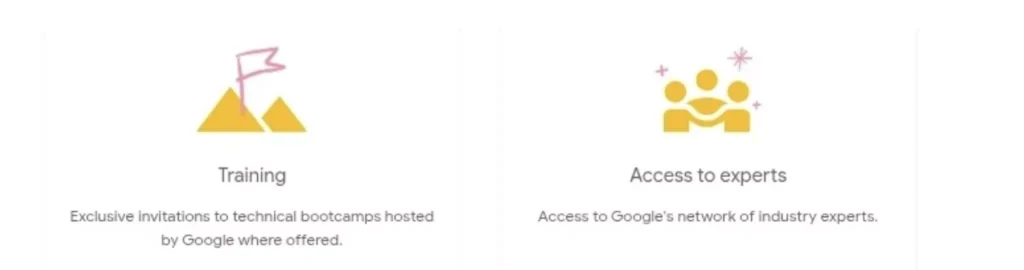
Startups gain access to Google’s network of industry experts and exclusive invitations to technical bootcamps hosted by Google. The connections you make during the program often outlast it.
Who Is Eligible for Google for Startups 2026?
Not every startup will qualify. Google is specific about who gets in, and understanding the criteria before applying saves you time.
Let us learn about exactly what they’re looking for.
1. Growth-Stage Startups with Traction
The Google for Startups program is best suited for growth-stage, revenue-generating tech startups. If you’re still at the idea stage or pre-revenue, this isn’t the right program for you yet. Come back when the numbers are moving.
2. You Must Be Building Something Scalable
Your startup must be building a scalable product or service with a significant total addressable market and a defensible growth model. Google wants to back startups with real potential to grow, not niche products with limited reach.
Read More: Google Step Is Now Google ASDI: Check Official Updates On Google Step 2026
3. AI and Machine Learning Is a Strong Advantage
The program prioritizes startups that are deeply technical, preferably leveraging AI or machine learning. You don’t have to be an AI-first company, but startups should aim to leverage AI and ML technology in their product, service, or operations, or show a clear interest in leveraging this technology in the future.
4. Your Technical Leadership Must Show Up
This is non-negotiable. Google requires strong commitment from the CTO or technical leadership to participate fully in the program. The founder and appropriate team members must be available to join all program elements of their cohort. If your CTO can’t commit, don’t apply.
5. No Equity or Fees Required
Just to be crystal clear: the Google for Startups Accelerator Africa is equity-free for all participating startups. Getting in won’t cost you ownership of your company.
How to Apply for Google for Startups Accelerator 2026?
The application deadline is April 19, 2026. Don’t wait until the last day.
This is exactly how the process works and how startups are chosen:
Stage 1: Submit Your Application
All incomplete applications after the application deadline will be ineligible. Fill everything out completely before you hit submit. A half-done application is the easiest way to get ruled out before anyone even reads it.
Stage 2: Eligibility Review
Google reviews completed applications in parallel to the application phase to check eligibility. If you tick all the boxes, then you move forward.
Read More: Google Summer Internship 2026: Aspiring Software Engineers Apply Now!
Stage 3: Interview and Pitch Session
Eligible applications are reviewed by a panel of experts and program team, who shortlist 40-60 startups for an interview and pitch session to evaluate the team, problem, solution, and scalability. This is where your story, traction, and team get put under the microscope.
Stage 4: Selection Board Review
Shortlisted startups from the interview phase are reviewed by the selection board for the final list. The final list of startups will receive the program contract to sign for the official announcement.
Key Dates to Know:
| Events | Date |
| Application Deadline | April 19, 2026 |
| Program-kick Off | June 2026 |
| Graduation Day | September 2026 |
- Application Deadline: April 19, 2026
- Program Kick-off: June 2026
- Graduation Day: September 2026
Tips for a Strong Application For Google Startup

Getting shortlisted from hundreds of applicants can be a career-defining milestone. This is how to give yourself the best shot.
1) Show Real traction
Come with your data. Active users, revenue, growth rate, customer validation. Whatever you have, put it front and center.
2) Make your AI angle Crystal Clear
Don’t bury it. Google wants to see that AI is core to your product, not a feature you tacked on. Be specific about how you’re using it and why it matters.
4) Demonstrate Global Scalability
Google isn’t just looking for startups solving Indian problems. They want startups solving Indian problems that can scale globally. Show them the bigger picture.
5) Be specific about your technical challenges
Founders outline the top technical challenges for their startup and are paired with experts to solve those challenges. The more specific you are about what you need help with, the stronger your application looks.
6) Get your full team aligned before applying
All founders (CEO and CTO) and appropriate team members must be available to join all elements of the program. Don’t apply if your team can’t commit. It’ll come up during the process.
Read More: 5 Free Internships Available For College Students In December 2025: Latest Opportunities Available
7) Submit Early
Rolling reviews mean earlier applications get more attention. Don’t wait until April 18th.
What Happens After The Program Ends?

The program officially wraps up in September 2026. But that’s not where the story ends.
Completing the Google for Startups Accelerator puts you in an exclusive alumni network of some of India’s most promising tech startups. Past alumni have gone on to raise follow-on funding, land enterprise customers, and scale their products globally.
You walk away with stronger technical foundations, a refined product strategy, and most importantly, relationships with Google engineers, mentors, and fellow founders that don’t disappear when the program ends.
Google also runs other startup programs in the region, so graduating from this accelerator opens doors to other Google initiatives you can tap into as you continue to scale. The real value isn’t just the three months. It’s what those three months unlock for the years ahead.
Read More: ISRO Summer Internship 2026: Best Opportunity For UG/ PG/ PhD Students
Will The Program Be Virtual or In-Person?
The accelerator will be a hybrid program with a mix of virtual and in-person sessions.
So, if you’re based in Mumbai, Bengaluru, Delhi, or anywhere else in India, you can participate. You’ll get the best of both worlds: the flexibility of remote sessions and the value of face-to-face interactions when it counts.
Upskill With Pregrad AI/ML Course
Google is looking for AI-first startups with technically strong founders. If you’re not there yet, Pregrad can get you there. Pregrad is a career accelerator and upskilling platform built for the next generation of founders and builders.
 |
Our AI/ML program gives you hands-on experience, mentor-led training, and industry-recognised credentials that actually move the needle.
You’ll work on real projects, learn from industry professionals, and build the technical foundation that programs like Google for Startups are looking for.
Don’t just apply. Apply ready. Join Pregrad today.
Frequently Asked Questions About Google for Startups
Q: Does Google take equity or charge a fee to join the program?
Ans: No. The Google for Startups Accelerator is completely equity-free. No fees, no equity. You keep full ownership of your company.
Q: Who should apply for the program?
Ans: Seed to Series A funded AI-first startups headquartered in India that are past the idea stage and have some level of customer validation and market traction.
Q: When will the program run?
Answer: The program runs from June to September 2026. The application deadline is April 19, 2026.
Q: Will the program be virtual or in-person?
Ans: It’s a hybrid program with a mix of virtual and in-person sessions.
Q: How are startups selected?
Ans: Applications are reviewed for eligibility, shortlisted by an expert panel, put through an interview and pitch session, and then reviewed by a final selection board. Only complete applications are considered.