

The AI Policy Fellowship application deadline is February 2nd, 2026, just weeks away. If you’re considering a career in AI policy or want to transition from tech to policy work, this fully-funded, three-month program could be your entry point. Here’s everything you need to know to submit a competitive application before time runs out.
AI policy is one of the fastest-growing career fields, but breaking in is not always easy. This is because most roles require policy experience, technical knowledge, or connections to the right networks. For students and mid-career professionals looking to enter the field, finding that first opportunity can be a bit tough.
The Institute for AI Policy and Strategy (IAPS) AI Policy Fellowship is designed to solve exactly that problem. This fully-funded, three-month program pairs fellows with leading experts to work on real AI policy projects like policy memos, government briefings, research reports, and high-level convenings.
This guide breaks down everything you need to know about the AI Policy Fellowship 2026, including who’s eligible to apply, what you’ll actually work on, the application process, and how to strengthen your candidacy. We’ll also cover fellowship details like the $15,000-$22,000 stipend, remote and D.C. options, and what happens after the program ends.
With the February 2nd application deadline approaching, now is the time to assess whether this fellowship fits your goals and start preparing your materials. Let’s walk through everything step by step.
Table of Contents
What Is the AI Policy Fellowship?
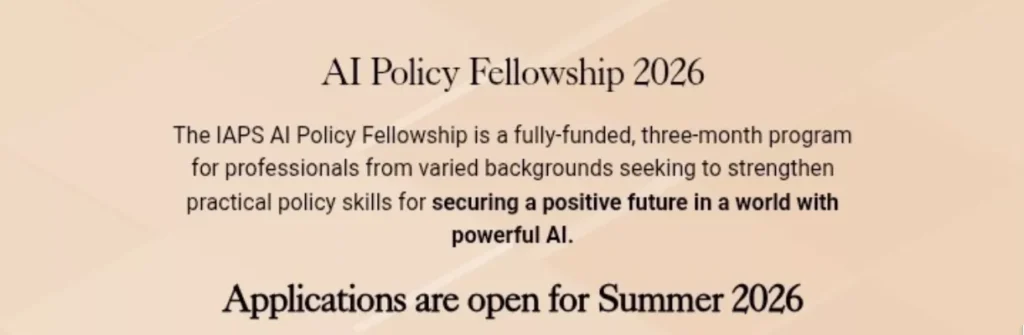
The AI Policy Fellowship is a three-month, fully-funded program run by the Institute for AI Policy and Strategy (IAPS), a nonpartisan think tank focused on AI governance, national security, and geopolitics.
IAPS produces policy research to address the implications of AI, from today’s most advanced models to potential artificial general intelligence (AGI) and superintelligence. Their work equips policymakers and industry leaders to navigate high-stakes risks and opportunities at the intersection of AI, national security, and global policy.
The fellowship exists to develop AI policy talent. It is designed for professionals from varied backgrounds such as tech, government, academia, think tanks, or other fields, who want to build practical policy skills for shaping how the world governs powerful AI systems.
Unlike traditional internships or academic programs, the AI Policy Fellowship centers on real-world impact. Fellows don’t just observe or study, they produce tangible outputs that influence national and international AI policy.
AI Policy Fellowship 2026: Key Highlights
Let us get some of the important dates for this AI fellowship program of 2026 in the table below.
| Event | Dates |
| Name of Internship | AI Policy Fellowship 2026 |
| Duration of Fellowship | 3 Months |
| Last date of filling application | February 2, 2026 |
| Start Date | June 1, 2026 |
| End Date | August 21, 2026 |
| Stipend | $15,000 (for fellows) and ($22,000) for senior fellows |
What Makes The IAPS Fellowship Stand Out?

So many AI programs exist, but the IAPS AI Policy Fellowship offers advantages that set it apart from other opportunities in the field.
Let us explore the advantages below.
1. Fully Funded with Competitive Stipends
Most AI Policy fellowships expect you to work for free or offer minimal compensation. IAPS pays fellows to participate full-time:
- Fellows receive $15,000 for the three-month program
- Senior Fellows receive $22,000 based on experience and expertise
- Healthcare benefits included for the duration of the fellowship
- Professional development stipend to support career growth
- Additional financial assistance available in select cases for career transitions after the program
This means you can commit fully without financial stress, be it that you’re a student or leaving a job to participate.
Read More: 7 Best MooC Courses With Certificates 2026: Start Learning Today!
2. Direct Mentorship from Leading Experts
Every fellow is paired one-on-one with an AI policy expert, either from IAPS or their extensive network. This direct mentorship offers you:
• Weekly one-on-one meetings with your mentor
• Direct feedback on your projects and career trajectory
• Access to their professional network and expertise
• Guidance on navigating the AI policy landscape
Past mentors include researchers from IAPS, Johns Hopkins Center for Health Security, Institute for Progress, and other top institutions.
3. Real Projects with Real Impact
Unlike academic exercises or simulations, fellowship projects create actual change. Fellows have:
- Briefed government officials on AI policy recommendations
- Published research that shaped national AI strategies
- Organized international AI governance conferences
- Contributed to policy memos used by think tanks and policymakers
- Published op-eds in major outlets on urgent AI issues
Your work during the AI Policy fellowship becomes part of your professional track record.
4. Flexible Options (Remote or D.C.)
The AI Policy fellowship accommodates different circumstances:
- D.C.-based option: Work in-person at IAPS offices with regular networking events
- Remote option: Participate from anywhere in the world with full support
- Hybrid approach: All fellows start with a required two-week in-person residency in D.C. (June 1-12), then choose remote or local
IAPS is a remote-first organization with systems designed to fully support international fellows.
5. Strong Career Outcomes
The AI Policy fellowship 2026 doesn’t just teach skills, it opens doors for career opportunities. Alumni have secured positions at:
- Government agencies working on AI policy
- Top think tanks like RAND, Institute for Progress, Center for Health Security, and IAPS itself
- Leading AI companies in policy and governance roles
- Academia pursuing research on AI safety and governance
- New organizations they founded to address AI challenges
Many fellows are recognized on lists of top AI policy researchers and continue shaping the field years after completing the program.
Read More: ChatGPT App Store 2026: Get All Your Favorite Applications on ChatGPT Itself Now!
6. Built-In Career Support
Beyond the mentorship on your project, you’ll also receive:
- Weekly coaching from an AI Policy fellowship Coordinator on career development, project management, and productivity
- Ongoing support from IAPS researchers and policy staff
- Work-in-progress sessions where you get direct feedback
- Access to IAPS’s professional network through structured networking opportunities
- Career transition assistance after the fellowship ends
The program is designed to ensure you build a sustainable AI policy career.
7. No Policy Experience Required
Unlike many competitive fellowships, IAPS doesn’t require prior policy experience. The program welcomes:
- Students (even undergraduates) with strong subject matter understanding
- Tech professionals looking to transition into policy
- Government employees seeking AI specialization
- Academics exploring policy applications of their research
- Career changers from unrelated fields who demonstrate aptitude
The common thread is your judgment, aptitude for understanding AI implications, and commitment to working on these challenges.
Read More: 8 Old Programming Languages Still in Demand in 2026 (And Why Developers Won’t Quit Them)
Who Should Apply For The AI Policy Fellowship?

The AI Policy fellowship welcomes a wide range of applicants, but certain profiles tend to succeed in the program. Let us take a look at who is eligible to apply for the AI Policy Fellowship.
1. Students (Undergraduate to PhD)
You are eligible to apply for the AI Policy fellowship if you’re:
- Studying computer science, political science, international relations, law, economics, or related fields
- Interested in AI policy but lack professional experience
- Looking to build a track record before entering the job market or graduate school
- Willing to commit three months to hands-on policy work
2. Tech Professionals
You are eligible to apply for the AI Policy fellowship if you:
- Work in AI development, software engineering, machine learning, or data science
- Want to shift from building AI to governing it
- Understand AI systems technically but need policy training
- Can take three months off (or arrange part-time participation)
This fellowship gives you the policy skills and network to make the career transition.
3. Policy Professionals
You are fit to apply if you:
- Work in government, think tanks, nonprofits, or policy organizations
- Want to specialize in AI governance and national security
- Need concrete AI policy experience to advance your career
- Already understand policy processes but need AI-specific expertise
The fellowship deepens your AI knowledge and connects you to the AI policy community.
4. Career Changers
You are eligible to apply if you:
- Come from law, journalism, academia, business, or another field
- Can demonstrate interest in AI policy through self-study, writing, or projects
- Want to pivot your career toward AI governance
- Bring unique skills or perspectives to AI policy discussions
IAPS AI Policy fellowship values diverse backgrounds and unconventional career paths.
What Is IAPS Actually Looking For?

When reviewing applications, IAPS AI Policy fellowship prioritizes:
- Good judgment: Ability to think clearly about complex, high-stakes problems
- Aptitude for AI implications: Understanding of why AI governance matters and what’s at stake
- Research and writing skills: Helpful but not required, since not all placements are research-focused
- Demonstrated interest: Evidence you’ve engaged with AI policy topics IAPS focuses on
- Potential for impact: Likelihood you’ll use the experience to contribute meaningfully to the field
It’s not mandatory to have a perfect resume. You only need to show you can think critically about AI policy challenges and are committed to doing something about them.
Read More: OpenAI Grove AI Talent Internship: Only 15 Candidates Can Apply!
Highlights Of The AI Policy Fellowship

Before applying, here’s what you need to know about the program structure, compensation, and logistics.
Program Dates
Duration: 3 months
Start Date: June 1st, 2026
End Date: August 21st, 2026
The fellowship requires full-time commitment for the entire period, though part-time arrangements are possible for exceptional candidates with other obligations.
Flexibility
Under exceptional circumstances, IAPS AI Policy fellowship can shift the start date a few weeks later, but this means missing some or all of the in-person programming in D.C. that happens June 1-12.
Location Options
You can choose between two tracks:
1. Washington, D.C. (In-Person)
- Work from IAPS offices throughout the program
- Regular in-person events, networking, and collaboration
- Direct access to D.C.’s AI policy community
- Must have legal authorization to work in the U.S. between June 1 and August 21, 2026. IAPS cannot sponsor visas.
2. Remote (From Anywhere)
- Participate fully from your home country
- IAPS is remote-first and has systems to support international fellows
- Support budget provided for in-person opportunities like conferences or meetings with your mentor
Legal hiring
IAPS can hire in many countries, though some exceptions exist due to administrative constraints. If you have questions about your country, contact fellowship@iaps.ai.
Stipend and Compensation
IAPS pays fellows based on experience level:
- Fellows: $15,000 for the three-month program
- Senior Fellows: $22,000 for the three-month program
Senior Fellow designation is based on prior experience and expertise. IAPS determines this during the selection process.
Benefits
- Healthcare coverage for the fellowship duration
- Professional development stipend for career growth
- Support budget for remote fellows (conferences, travel to meet mentors, etc.)
- In select cases, additional financial assistance for career transitions after the program
Part-Time Options
Full-time participation is the default, but IAPS AI Policy fellowship can accommodate part-time schedules for exceptional candidates with day jobs or other commitments. Part-time spots are limited, so full-time applicants are prioritized.
Relocation to D.C.
IAPS does not provide relocation funding by default. However, they may consider additional support based on need in exceptional circumstances.
For the mandatory two-week residency (June 1-12), remote fellows need to cover their own travel and accommodation unless they qualify for exceptional support.
Read More: ChatGPT 5: Breakthrough or Breakdown?
What Happens After August 21st?
The AI Policy fellowship officially ends on August 21st, but:
- Some fellows receive extensions to complete projects
- IAPS may offer continued collaboration through contracts for specific projects
- Alumni often stay connected to the IAPS network and receive career support
What Will You Work On During The Program?

The AI Policy fellowship is not a classroom program or passive internship. You’ll work on real AI policy projects that produce tangible outputs. Here’s what your three months will look like:
Week 1-2: In-Person Kickoff in Washington, D.C. (June 1-12)
Every fellow begins with a mandatory two-week residency in Washington.
During this period, you’ll:
- Meet your assigned mentor and discuss your fellowship project
- Connect with other fellows, IAPS researchers, and AI policy experts
- Participate in training sessions on AI systems and current policy challenges
- Workshop your fellowship project to refine scope and goals
- Attend roundtables, policy briefings, and networking events
- Build relationships that support your work for the remaining weeks
This kickoff sets the foundation for your entire fellowship experience.
Weeks 3-12: Independent Project Work (June 13 – August 21)
After the D.C. residency, you’ll spend the remaining 10 weeks working on your fellowship project with ongoing mentorship and support.
Your Core Responsibilities:
1. Execute Your AI Policy Fellowship Project
You’ll work on a project chosen in collaboration with your mentor. The project will align with their expertise and your interests. Examples include:
- Policy research: Writing briefs, memos, or reports on AI governance topics
- Government engagement: Briefing officials on AI risks, safety measures, or regulatory approaches
- Event organization: Planning conferences, workshops, or Track II diplomatic convenings
- Strategic advising: Supporting think tanks, government agencies, or organizations on AI policy strategy
- Public communication: Publishing op-eds or analysis on urgent AI policy issues
- Operational support: Helping new AI policy organizations streamline operations or expand to new jurisdictions
Your project will produce concrete deliverables, documents, presentations, events, or strategic recommendations that advance real-world AI policy.
Read More: ChatGPT Age Restriction: Is ChatGPT 5.2 Restricting Under Age Users (Below 18)?
2. Weekly Meetings with Your Mentor
You’ll have regular one-on-one sessions with your assigned AI policy expert. These meetings provide:
- Guidance on your project direction and execution
- Feedback on drafts, presentations, or strategies
- Introductions to relevant contacts in their network
- Career advice specific to AI policy
Your mentor is your primary resource for subject matter expertise.
3. Weekly Coaching Sessions
Beyond your mentor, you’ll meet weekly with an IAPS Fellowship Coordinator who focuses on:
- Career development and long-term planning
- Project management skills
- Productivity strategies
- Navigating challenges during the fellowship
This coaching ensures you’re not just completing a project but also building career skills.
4. Work-in-Progress Sessions
You’ll participate in regular feedback sessions with IAPS researchers and other fellows where you:
- Present your ongoing work
- Get direct feedback from AI policy professionals
- Learn from other fellows’ projects
- Refine your approach based on expert input
These sessions keep your work sharp and aligned with policy realities.
5. Professional Development
Throughout the fellowship, you’ll have access to:
- IAPS’s professional network through structured introductions and events
- Additional training on AI policy topics relevant to your project
- Networking opportunities with think tanks, government officials, and industry leaders
- Career guidance on next steps after the fellowship
Your Typical Weekly Schedule
While each fellow’s schedule varies based on their project, a typical week includes:
- 30-40 hours: Independent project work (research, writing, organizing, advising)
- 1-2 hours: Mentor meeting
- 1 hour: Fellowship Coordinator coaching session
- 1-2 hours: Work-in-progress sessions or IAPS team meetings
- Flexible time: Networking, professional development, or additional project needs
Remote fellows structure their days independently. D.C.-based fellows may spend more time in the IAPS office collaborating with the team.
Read More: Temple Device by Deepinder Goyal: Is Gravity & Aging Really Related?
Final Week of AI Policy fellowship: Project Presentation
In the last week of the fellowship (August 18-21), you’ll:
- Present your completed project to IAPS staff and fellows
- Demonstrate the impact of your work
- Receive feedback and recognition for your contributions
- Discuss potential next steps, including continued collaboration or career opportunities
This presentation showcases what you’ve accomplished and solidifies your place in the AI policy community.
By the end of the fellowship, you should have:
- Completed a concrete AI policy project with real-world application
- Built strong relationships with your mentor and the IAPS network
- Developed practical skills in policy research, government engagement, or strategic advising
- Strengthened your track record for future AI policy roles
- Gained clarity on your next career steps
Your duty during the fellowship is to produce meaningful work on AI policy challenges while building the skills and connections needed for a long-term career in the field. You’ll work independently, but with significant mentorship and support every step of the way.
Application Process (Step-by-Step)
The application has three stages. Here’s exactly what to expect and how to prepare.
Stage 1: Application Form
What you’ll submit:
- Basic information (background, education, experience)
- Why you want to join the fellowship
- Your interest in AI policy and IAPS’s work
- Preference for D.C. or remote participation
- Whether you’re applying as a Fellow or Senior Fellow
How to prepare:
- Review IAPS’s research at iaps.ai/ourresearch to understand their focus areas
- Be specific about why AI policy matters to you
- Explain what you hope to accomplish during the fellowship
- Show genuine interest.
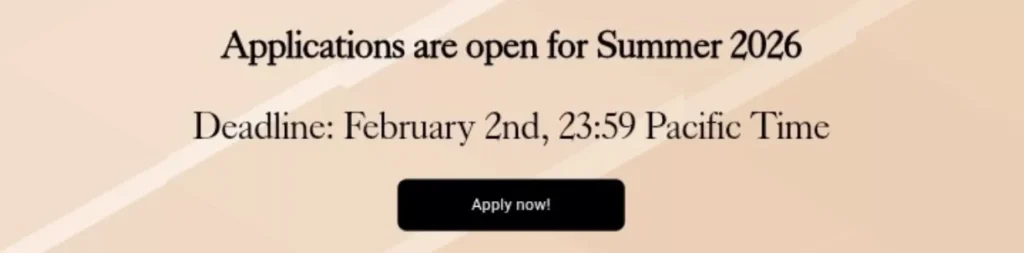
| Timeline: Submit by February 2nd, 2026 at 23:59 Pacific Time |
Stage 2: Written Task + Pre-Recorded Interview
If you pass Stage 1, you’ll receive:
Written Task (3 hours):
- A policy-related assignment testing your thinking and writing skills
- You’ll have a set timeframe to complete it
- Focus on clarity, logic, and understanding of AI policy issues
Pre-Recorded Interview (30 minutes):
- Answer questions on video
- Discuss your background, interests, and motivations
- No live interviewer as you’d record responses to prompts
How to prepare:
- Practice articulating why you care about AI policy
- Be concise and direct in your answers
- Show your reasoning process, not just conclusions
Stage 3: Live Interview (60 minutes)
Final candidates have a live conversation with an IAPS team member.
What to expect:
- Discussion about your background and interests
- Questions about AI policy challenges
- Exploration of potential fellowship projects
- Opportunity to ask your own questions
How to prepare:
- Be ready to discuss specific AI policy topics
- Think about what kind of project interests you
- Prepare questions about the fellowship
- Be yourself
Selection Timeline
- Application deadline: February 2nd, 2026
- Final decisions: End of April 2026
- Fellowship starts: June 1st, 2026
IAPS will notify all applicants of decisions before the end of April.
Tips for A Strong Application For AI Policy fellowship
These practical tips will strengthen your application and increase your chances of selection.
- Show Genuine Interest in IAPS’s Work
- Be Specific About Your Goals
- Demonstrate Clear Thinking
- Highlight Relevant Experience (Even If Unconventional)
- Proofread Everything Before submitting
- Don’t Wait Until the Last Day
- Be Yourself
Read More: ChatGPT OpenAI: Is OpenAI Launching ChatGPT-5? New AI Model Coming this Summer!
What Happens After the Fellowship: Career Outcomes

The fellowship is also a launchpad for long-term AI policy careers. Here’s where fellows go after the program ends.
Where Alumni Work Now?
IAPS fellows have secured positions at top organizations across government, think tanks, industry, and academia:
1. Think Tanks and Research Organizations:
- RAND Corporation
- Institute for Progress
- Center for Health Security at Johns Hopkins
- Center for a New American Security (CNAS)
- IAPS itself (several fellows join full-time)
- Center for AI Security and Access
- Safe AI Forum
- ERA (Existential Risk Alliance)
2. Government and Policy Roles:
- U.S. government agencies working on AI policy
- International AI governance initiatives
- Legislative offices focusing on technology policy
- Regulatory agencies overseeing AI systems
3. Industry:
- AI companies in policy, governance, and safety roles
- Tech firms building AI governance infrastructure
- Consulting firms advising on AI strategy
4. Academia:
- PhD programs at top universities (including Oxford)
- Research positions studying AI safety and governance
- Academic roles combining technical and policy expertise
5. Entrepreneurship:
- Founding new AI policy organizations
- Starting initiatives addressing AI governance gaps
- Building tools or platforms for AI safety
Real Examples from Past Fellows
Andrea Sawka Fiegl worked with The Future Society during her fellowship on AI governance frameworks. She now works at Common Cause on emerging technologies and democratic resilience, bringing 15+ years of USAID and Senate Foreign Relations Committee experience to AI policy.
Dave Banerjee wrote a report on AI integrity during his fellowship. He’s now a Research Associate at IAPS and Research Manager at ERA, focusing on securing frontier AI systems.
Tao Burga worked with the Institute for Progress and CNAS during his fellowship, translating compute policy proposals for government and industry. He’s now a full-time Technology Fellow at the Institute for Progress.
Sumaya Nur Adan wrote a commentary piece on the international network of AI Safety Institutes during her fellowship. She co-founded the Center for AI Security and Access and is now pursuing a DPhil in Computer Science at Oxford.
Read More: ChatGPT New Feature: Try This Temporary Chat Feature On ChatGPT & Google Gemini, Latest Update 2025
Why Do Fellows Succeed After the Program?
The fellowship creates advantages that last beyond three months:
1. Concrete Track Record
You finish with tangible work products including published research, policy memos, briefings given, or events organized. This proves you can deliver in AI policy roles.
2. Expert Network
Your mentor becomes a long-term connection. You also build relationships with IAPS researchers, other fellows, and the broader AI policy community during the D.C. residency and throughout the program.
3. Career Clarity
Three months of hands-on work helps you understand what AI policy work actually involves and where you fit best, government, think tanks, industry, or academia.
4. Continued Support
IAPS doesn’t abandon you after August. Alumni receive:
- Ongoing career advice and networking support
- Introductions to hiring organizations
- In some cases, additional financial assistance for career transitions
- Opportunities for continued collaboration on IAPS projects
5. Community Recognition
Many IAPS fellows are recognized on lists of top AI policy researchers. The program has built a reputation for producing high-quality talent, which helps when applying for competitive roles.
Upskill with Pregrad🚀
Pregrad is a career accelerator and upskilling platform designed to help students gain real-world skills and launch their careers before graduation.
At pregrad, you’ll learn industry‑aligned, mentor‑led programs in fields like AI/ML, data science, digital marketing, cybersecurity and more.
Learners work on hands‑on projects, attend live sessions with industry professionals, and earn recognised credentials that boost credibility with recruiters.
Pregrad also connects you with a broader career network and opportunities to accelerate your job search and career prospects.
Join pregrad today and start your career before you graduate!
AI Policy Fellowship Frequently Asked Questions
Q: Do I need a technical AI background before applying?
Answer: No. IAPS welcomes varied backgrounds. Clear thinking and genuine interest matter more than technical expertise.
Q: Do I need policy experience?
Answer: No. The program trains people without policy experience.
Q: What’s the selection process?
Answer: The selection process happens in three stages: application form, written task + video interview, live interview. Decisions are made by end of April 2026.